


How To Find Your Transmission Or Engine Code Before You Order A Used Part
Your engine and your transmission each have a code, and that code, more than your car’s year, make and model, decides which used part will fit. You can find it in a few places: the VIN, the sticker on the driver’s door jamb, the label under the hood, or a stamp on the part itself. This guide goes through each one in order, so you can order a used engine or a used transmission once and get the right one.
Why the code matters more than the model name
Two cars with the same year, make and model can leave the factory with different engines and different transmissions. A 2014 Honda Accord, for instance, was sold with a four-cylinder and a V6, and the transmissions behind them were not the same. Even within one engine size, manufacturers change parts partway through a production year: a new sensor, a different wiring connector, a revised oil pan. The badge on the trunk doesn’t tell you any of that. The code does.
That’s why a parts seller who asks for your year and model will usually follow up with “what engine, what transmission, and is it front-wheel or all-wheel drive?” It isn’t a trick question. They’re trying to keep you from buying a unit that looks right and doesn’t fit.
The cost of a wrong guess is real. A used engine or transmission is heavy, so shipping it twice adds up. Your mechanic may already have the car on the lift. And every day the car waits is another day you’re without it. Spending ten minutes to find the right code before you order is the cheapest way to avoid all of that.
If you’re still deciding between a used, rebuilt or remanufactured unit, our guide to used vs. rebuilt vs. remanufactured transmissions covers the trade-offs. Once you’ve picked, the steps below will help you pin down the exact part.
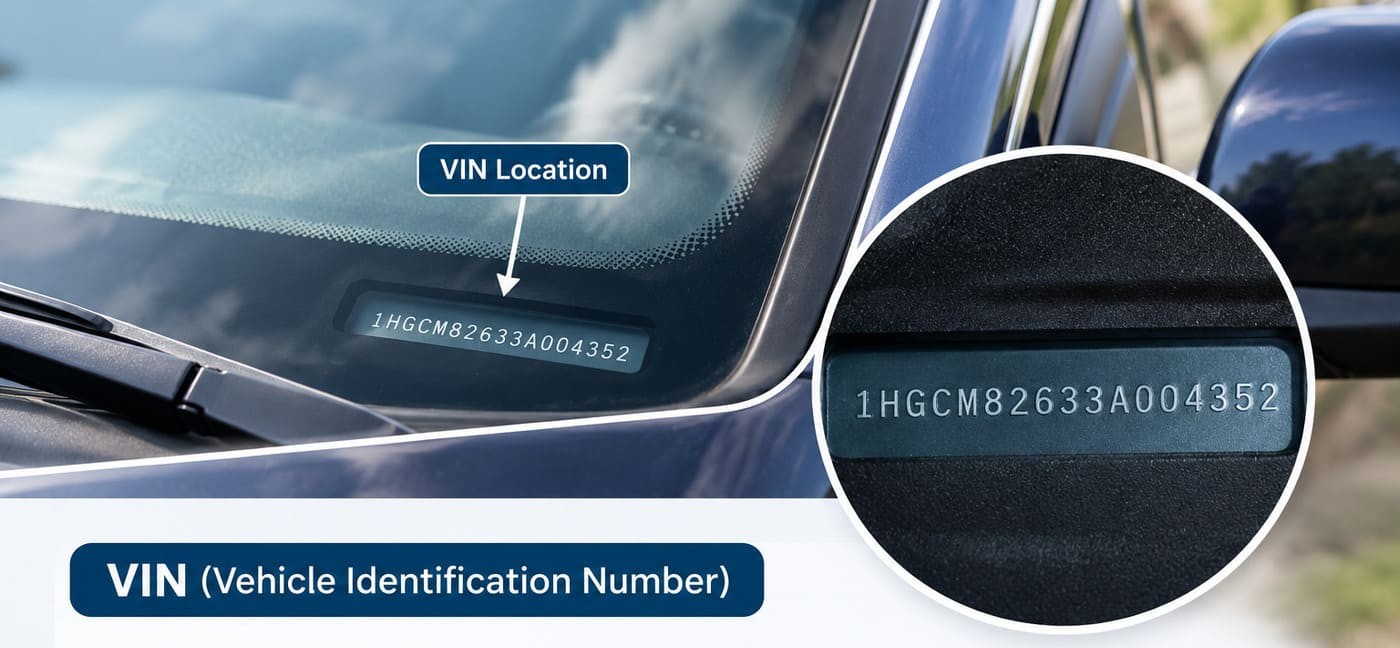
Step 1: Start with your VIN
The vehicle identification number is the first thing any parts seller will ask for, and it’s the easiest to find. It’s a 17-character code of letters and numbers (the letters I, O and Q are never used). You’ll find it in a few places:
– At the bottom of the windshield on the driver’s side, readable from outside the car
– On the sticker inside the driver’s door frame
– On your registration, insurance card or title
A few positions in the VIN matter for parts. The tenth character is the model year, and the eleventh is the assembly plant. On many vehicles sold in the US and Canada, the eighth character identifies the engine. That character is a single letter or digit that points to a description like “V6, 3.5 liters.” It isn’t the same as the full engine code stamped on the block, but it gets you close, and it’s often enough for a seller to start a search.
What the VIN usually doesn’t tell you is the transmission. Most VINs don’t carry that information, so you’ll need to look elsewhere for it. The next steps cover where.
To turn a VIN into a readable list of specs, use a free VIN decoder. The one run by the US National Highway Traffic Safety Administration is a common choice. Decoders built around US data sometimes show less detail for Canadian-market vehicles, so treat the result as a starting point and not the final answer.
One small habit saves a lot of trouble: take a photo of the VIN instead of typing it from memory. A single wrong character sends a lookup to a different vehicle entirely.
Step 2: Check the sticker on the driver’s door jamb
Open the driver’s door and look at the frame where the door latches. You’ll see a label, usually white or silver, called the safety certification label. It carries the VIN, the weight rating, the recommended tire pressure, and the month and year the vehicle was built.
That build date matters more than you’d expect. If the sticker says 09/14, the car was built in September 2014, and that can decide which version of a part you need when the manufacturer made a change during the model year. Sellers ask for it for exactly that reason.
On some makes the label goes further. Ford labels, for example, include a TR field for the transmission code and an AX field for the axle ratio. If you drive a Ford, read those two entries carefully and include them when you ask for a quote.
Many GM vehicles also have a separate Service Parts Identification label, often in the glove box or the spare tire area. It lists three-character RPO codes that cover the engine, the transmission and the options. The codes look like a jumble, but a parts specialist can read them quickly, so photograph the whole label instead of picking out what you think matters.
If the door jamb sticker is faded, scuffed or missing, move on to the next step. That’s common on older cars, and on any car where the driver’s door was replaced after a collision.
Step 3: Look for the label under the hood
Pop the hood and check its underside first, then the radiator support (the metal frame at the front of the engine bay) and the fan shroud. Most vehicles carry a vehicle emission control information label in one of those spots. It’s a printed sticker that lists the engine’s displacement, such as 2.5L or 3.5L, the emissions standard the car meets, and an engine family code.
The engine family isn’t the same as the engine code, but it narrows things down, and many sellers can match it to the right engine. The displacement is the single most useful line on the label, because a 2.4 and a 3.5 are completely different engines.
Some vehicles were sold as California-emissions models and others as federal, or 49-state, models. The label usually says which one, and a seller may need to know when matching an engine.
Two cautions. First, the name printed on the engine cover, like “EcoBoost” or a similar marketing name, usually describes a whole family of engines and not one specific unit. Second, these labels fade and peel, and the hood insulation they’re stuck to gets replaced after repairs. If yours is gone or half unreadable, take a photo of whatever you can still read. Even a partial label helps.
Step 4: Read the stamp on the engine or transmission itself
When the stickers and paperwork don’t give you a clear answer, the part itself usually does. Manufacturers stamp or label both the engine and the transmission at the factory.
For the engine, the code is usually stamped into the block on a flat machined pad. Common spots are near the transmission bellhousing, on the side of the block close to the oil filter, and on the front near the timing cover. Bring a flashlight and a rag to wipe off the grime, and use a small mirror or your phone camera for tight spots. Codes come in different formats: K24 on some Hondas, 2AR-FE on some Toyotas, and so on.
For the transmission, the ID is usually on a metal tag or sticker on the case, or stamped into it. Many of these sit low on the case or on the bellhousing side, so a transmission is harder to read than an engine. Codes look like 6F35 (Ford), 6L80 (GM) or U660E (Toyota).
Do this with the engine off and cool. Don’t get under the car unless it’s on a proper lift or sturdy jack stands, and never rely on a jack alone. If crawling under the car isn’t practical, hand this part to your mechanic. Ask them to photograph the tag while the car is up, or when the old unit comes out. That photo is the best thing you can send a parts seller.
You may also notice numbers cast into the metal of the case or block. Those are casting numbers. They identify the housing, not the complete unit, and they aren’t the same as the engine or transmission code, so use them only if a parts specialist asks.
Other details that decide whether a part fits
The code gets you most of the way there. A few other facts can still change which unit is right, so gather them while you’re already looking:
- The build date from the door jamb sticker
- The drivetrain: front-wheel drive, rear-wheel drive, all-wheel drive or four-wheel drive
- The engine size, and whether it’s turbocharged
- The transmission type: automatic, manual, CVT or dual-clutch
- The trim level and any special packages, such as towing or hybrid
- Whether the car was sold new in the US or in Canada, since equipment can differ
- Whether the engine or transmission has ever been replaced
Drivetrain deserves a second look. An all-wheel-drive model can use a different version of what looks like the same transmission, and a seller can’t tell from a photo of the car which one you have.
You don’t need a perfect set. Most people find three or four of these in a few minutes, and that’s usually enough for a parts specialist to get started. The rest can be confirmed on the phone.
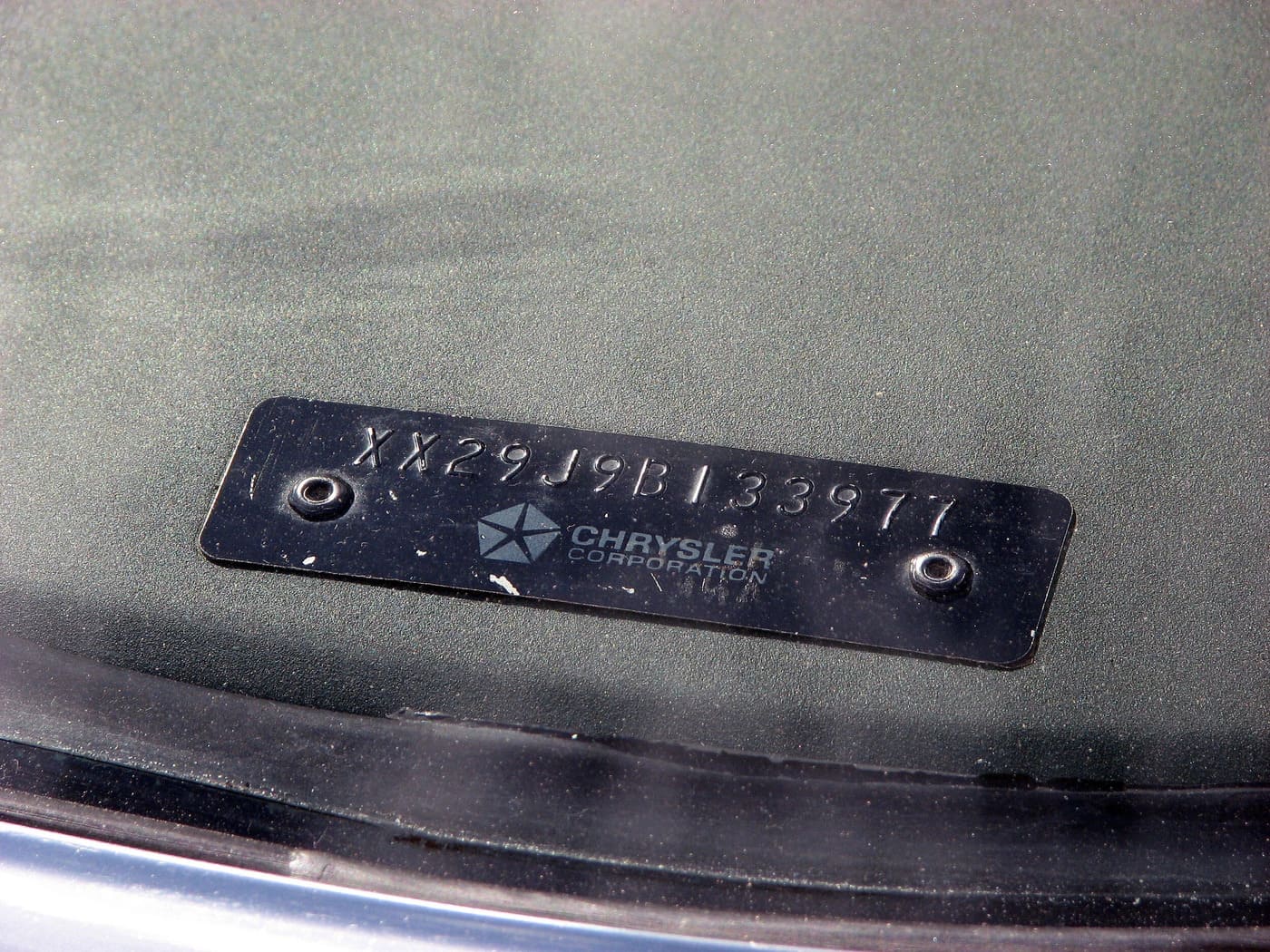
Quick reference: where to look
Here’s the whole search on one page. Save it to your phone before you head out to the car.
| What to find | Where to look | What it tells you |
|---|---|---|
| VIN | Base of the windshield, driver’s door frame, registration, insurance card, title | Model year, assembly plant, and on many vehicles the engine |
| Door jamb label | Inside the driver’s door frame | Build date, and on some makes the transmission and axle codes |
| Service parts label (many GM vehicles) | Glove box or spare tire area | RPO codes for the engine, transmission and options |
| Emission control label | Underside of the hood, radiator support or fan shroud | Engine displacement, engine family, California or federal emissions |
| Engine block stamp | Machined pad near the bellhousing, oil filter or timing cover | The engine code |
| Transmission tag | Metal tag, sticker or stamp on the transmission case | The transmission model |
| Original window sticker, owner’s manual, service records | Glove box or your files | Engine and transmission in plain words, sometimes part numbers |
What to do if the tag is missing or unreadable
This happens a lot, especially on older cars, cars that have had collision repairs, and vehicles that spent years on salted winter roads. You still have options.
- Call a dealership parts counter with your VIN. They can usually look up the engine and transmission the car was built with.
- Go through your paperwork. The original window sticker, service records, repair invoices and the owner’s manual often name the engine and transmission in plain words. An invoice for a past replacement may also list the part number.
- Ask your mechanic. When the old engine or transmission comes out, a photo of its tag takes a few seconds.
- Find out if anything was swapped. If a previous owner replaced the engine or transmission, the VIN describes what the factory installed, not what’s in the car now. This is one of the most common reasons a part that should have fit doesn’t.
- Send us what you have. A VIN, the year, make and model, and a few photos are often enough for our team to narrow it down. Reach us through our contact page or call 1800 608 3868.
How BackToRoad Auto Parts helps you get the right part
At BackToRoad Auto Parts, matching the part to the car is most of the job. We supply used OEM parts to customers across the USA and Canada, and our parts locator connects you with a network of certified recyclers. That lets us search for the exact engine, transmission or other component your car needs, not a close guess. The parts we sell are tested and graded recycled OEM parts, the same kind of component your car left the factory with.
Here’s an easy way to get started:
- Collect your VIN, your year, make and model, and whatever you found in the steps above.
- Visit our parts page or call us at 1800 608 3868.
- Tell us what you found and what you couldn’t find. Missing codes aren’t a problem for our team, and plenty of customers start with only a VIN.
- Before you order, read our warranty and shipping and handling pages so you know what to expect. Our FAQ answers the most common questions.
We would rather spend a few extra minutes confirming your details than see you pay for a part that doesn’t fit.
If you already know what you’re shopping for, you can go straight to the page for your make: Honda, Toyota, Ford, Chevrolet, Nissan, Hyundai, Jeep, Dodge or Subaru. And if a symptom is what sent you here, our post on a CR-V shuddering between 15 and 40 mph shows how to tell when a used transmission is the fix.


